

Clinical Care & Reputation, Department of Cardiac Surgery:
Rooted in Excellence in Patient Care, Education & Research
The University of Michigan Health System is nationally ranked #5 in Newsweek and #11 in US News and World Report. Michigan’s Department of Cardiac Surgery sets the standard for premier heart care today, consistently ranking among the top centers in the nation and #1 in the state of Michigan for heart, vascular, and stroke care.
Our department is a high volume center for treatment of heart disease—with volume up 50 percent in the past five years. Surgeons in our Department have handled over 40,000 cases since 1999 and countless more since cardiac care began at Michigan in 1956. Given the direct correlation between volumes and outcomes, our expertise bodes well for patients. With so many surgeons considered leaders in the field, numerous new, less invasive technologies have been developed or championed by our surgeons. Our team offers all options from the least invasive/ percutaneous therapies, to minimally invasive/ port access, to major open heart surgery, all with outstanding outcomes.
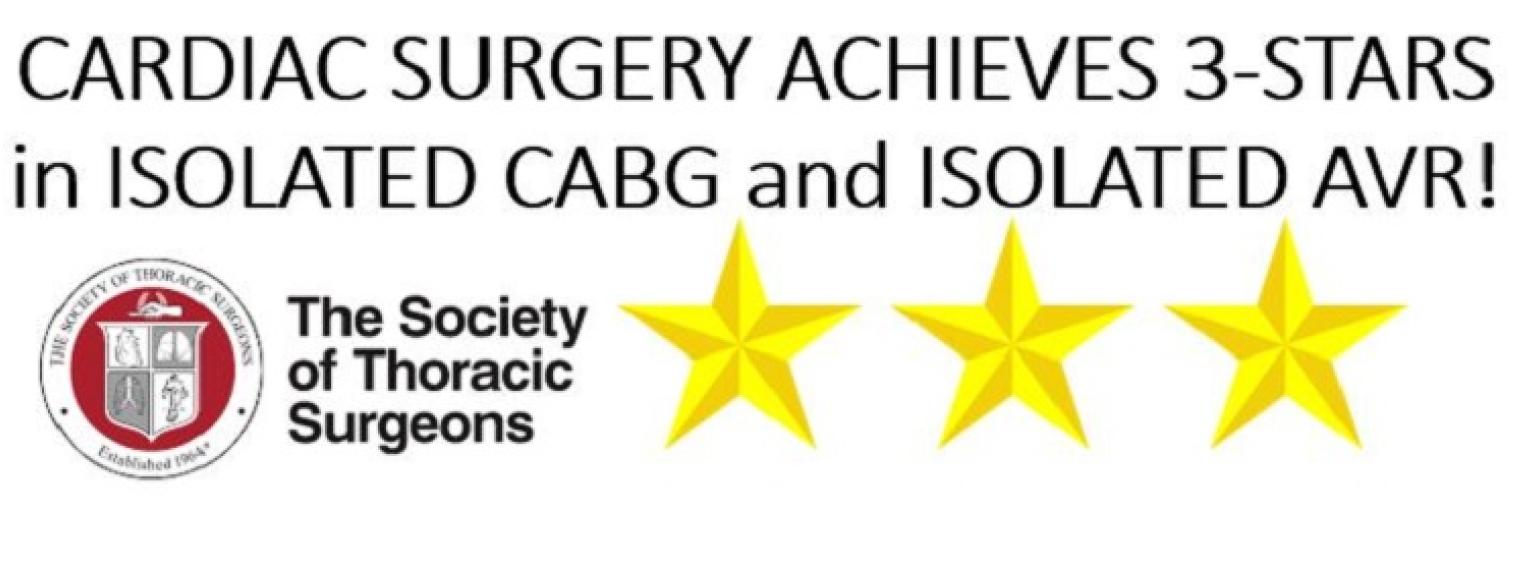
At the heart of our department is the focus on quality and superb outcomes. Together with the members of our Section of Health Services Research, we have created real-time dashboards to facilitate our team’s ability to provide the most up to date, best care. In the last decade, our outcomes consistently rank among the top 3% in the nation based on STS star ratings, despite caring for the many of the most critically ill patients across the state and region.
Leaders & Best in the Field
We have recruited faculty from all the top training hospitals across the country, including our own. This diversity provides a robust understanding of different approaches and techniques. As a result, our surgeons have developed expertise across all subspecialties within adult and pediatric cardiac surgery and hold leadership roles in national and international societies. Members from our Department are continuously creating new knowledge by publishing hundreds of peer-reviewed articles each year.
Adult Cardiac Surgery Advances Heart Care
Approximately 2,000 adult cardiac surgery operations are performed, annually, by continually evolving and advancing treatments for cardiac and aortic diseases. Our Department has been awarded numerous accolades for outstanding patient care including the recent recognition as an American Heart Association Mitral Repair Reference Center, one of only 5 in the nation. Our patients come from all over the nation and world to seek expertise of our team.
A few highlights from our Annual Outcomes Report  Outcomes include the Transcatheter Valve and MATRIX Programs, led by internationally recognized leaders that provide cutting-edge, less invasive treatment for valvular heart disease including all the percutaneous and minimally invasive surgical therapies that are not available elsewhere. Since its inception nearly 30 years ago, our aortic center has treated over 6000 patients. Our surgical arrhythmia program includes hybrid, less invasive approaches in concert with our Cardiovascular Medicine electrophysiologists. Michigan’s advanced heart failure program is led by surgeons and cardiologists who are internationally renowned and has embarked on several new methods to improve donor hearts before transplantation. The team's expertise also extends to the review of complex ischemic heart disease patients with multiple specialists creating an individualized approach for each patient. Our pulmonary embolectomy and thromboendarterectomy volume has grown each year and now is one of the largest experiences in the nation as is our Hypertrophic Cardiomyopathy program. All of this expertise and volume results in mortality outcomes of half of those seen at other centers in the nation.
World Class Pediatric Heart Surgery
The Section of Pediatric Cardiac Surgery is one of the busiest congenital heart programs in the U.S. and the largest in the state of Michigan. Pediatric Cardiac surgeons perform approximately 900 procedures annually. The pediatric program is the #1 ranked program in Michigan in the US News and World Report rankings for congenital heart care. Pediatric patients have come from 50 states and 60 countries for surgical treatment of all forms of congenital heart defects. Last year, roughly a quarter of patients were from states outside of Michigan. Our fetal heart program is ranked in the top five in the world in volume. Our surgeons are leaders in performing surgery to repair single ventricle heart defects, as well as neonatal arterial switch operations, both rare, complex surgeries. With a dedicated 23-bed intensive care unit for congenital heart disease, the mortality rates for the most complex cases at Michigan are half the national average.
Diversity, Equity & Inclusion
The Department of Cardiac Surgery, in support of Michigan Medicine's Office of Health Equity and Inclusion (OHEI), is committed to a diverse, equitable, and inclusive environment with regard to race, gender, sexual orientation, disability, and religious beliefs. We aim to create a supportive environment regardless of background and firmly believe our Department is stronger with this welcoming, accepting view.
At the Forefront of Innovation
Surgeons at the University of Michigan have long been the creators and champions of new technology. This culture of innovation began decades ago with the introduction of extracorporeal membrane oxygenation, developed at the University of Michigan. Since then, the Department of Cardiac Surgery has pioneered numerous procedures, including minimally invasive valve surgery and safer methods to repair aortic aneurysms and dissections. Surgeons from around the nation seek input on technique from our team. Michigan has become a world leader in caring for children with hypoplastic left heart syndrome, treating over 1,000 newborns with mortality less 10%.
A Focus on Education
The University of Michigan consistently ranks as the top 1 or 2 public university in the country and in top tier of medical schools. This focus on education translates to the commitment of our Department to develop the future leaders in our specialty. We recruit trainees from all backgrounds and emphasize a culture of team based care. We are fortunate to recruit the top students and residents and provide experience in high complexity cases, incredible volume, and research opportunities second to none.
Premiere Surroundings for Patients & Researchers
Cardiac Care patients have the advantage of being treated in world class, highly-ranked facilities, including the Samuel and Jean Frankel Cardiovascular Center, which was built in 2007 and the C.S. Mott Children’s Hospital built in 2011.
As you enter the Cardiovascular Center, you are enveloped in a calming environment in a 4 story glass atrium filled with healing gardens and a waterfall. The 35,000 square foot facility is home to the most advanced multidisciplinary care. The Center has received accolades for its efforts in design for patient and family-centered care. For more information on the facility, visit the Cardiovascular Center website.
The C.S. Mott Children’s Hospital is designed to be both patient and parent friendly. Nearly two floors of Mott are dedicated to congenital heart care. Every patient has a private room. Expectant mothers who have received a fetal diagnosis of a heart defect deliver their baby in the same facility where their child is cared for once born, avoiding the need to transfer the newborn to another center. A Ronald McDonald house, which provides comfortable lodging for parents of Mott patients who have traveled from outside of Ann Arbor, is located conveniently just outside the ICU doors.
Researchers pursue innovations in cardiac surgery at the North Campus Research Complex, a voluminous space in which to explore potential new discoveries. Acquired from Pfizer by the University of Michigan Medical Center in 2009, the complex of 28 buildings totals 2.1 million square feet of space devoted to office, research and manufacturing. The setting is one that is conducive to collaboration. Here, cardiac surgeons work side by side with those in other disciplines, including engineers and biologists, to encourage cross-pollination, a situation that often leads to the greatest breakthroughs. For more information on the Research Complex, visit the NCRC website.
Compassionate Listeners
Our surgeons never take for granted the seriousness of what it means to fix a patient’s broken heart and body. Our surgeons are sensitive to the fact that the prospect of cardiac surgery can be frightening. We provide empathy and comfort, while ensuring that patients’ concerns are heard and that they are well cared for during their hospital stay. Our team also ensures that patients’ families are involved in the complex care including a recovery plan to get their loved ones back to a good quality of life.
Charitably-Minded
Many of our faculty give back to the community through charitable efforts, such as, participating in overseas missions to operate on disadvantaged populations in locations such as the Dominican Republic, India, and Africa. Locally, our faculty work to educate the public on heart health and perform research designed to improve the outcomes in Cardiac Surgery patients.